
Data User Guide | Prioritization
The prioritization phase marks the transition from evaluation to decision-making by bringing together the insights gained throughout the previous phases. After reflecting on implementation effort as well as economic and strategic value, the focus now shifts towards identifying which concepts appear most meaningful to pursue within the organizational context.
The goal of this phase is to create a clear and transparent prioritization based on the reflections developed so far. Rather than relying solely on numerical results, the process encourages comparing concepts holistically by considering their expected value, feasibility, and overall relevance. By documenting which ideas appear more or less promising, the prioritization process helps to transform individual evaluations into a structured overview that supports informed judgement.
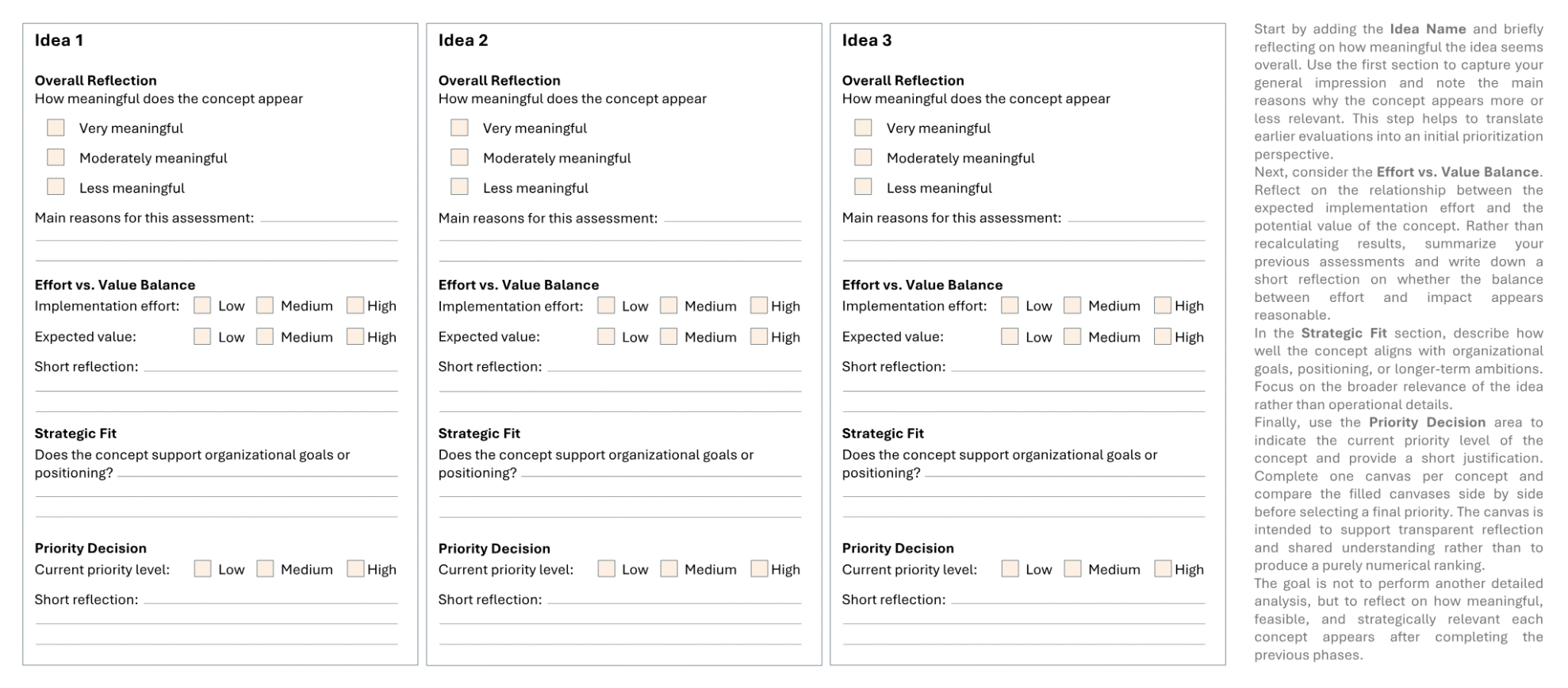
To support this step, a prioritization canvas is used to capture the key reflections from the evaluation phase and to highlight which concepts stand out as particularly relevant or realistic. The outcome of this phase is not only a ranking of ideas, but a shared understanding of why certain concepts appear more meaningful than others.
Prioritization Canvas
Self-Assessment Reminder
Before selecting a final priority, take a moment for a short self-assessment. Review the completed prioritization canvases and reflect on whether your judgement may have been influenced by personal preferences, organizational expectations, or overly optimistic assumptions. Consider if the concepts marked as highly meaningful still appear realistic when viewed from a broader perspective, including implementation constraints and long-term relevance.
Use this reflection to question initial impressions and to ensure that the final selection is based on a balanced view of effort, value, and strategic fit. The purpose of this step is not to change decisions arbitrarily, but to strengthen confidence that the chosen concept reflects a well-considered and realistic priority.